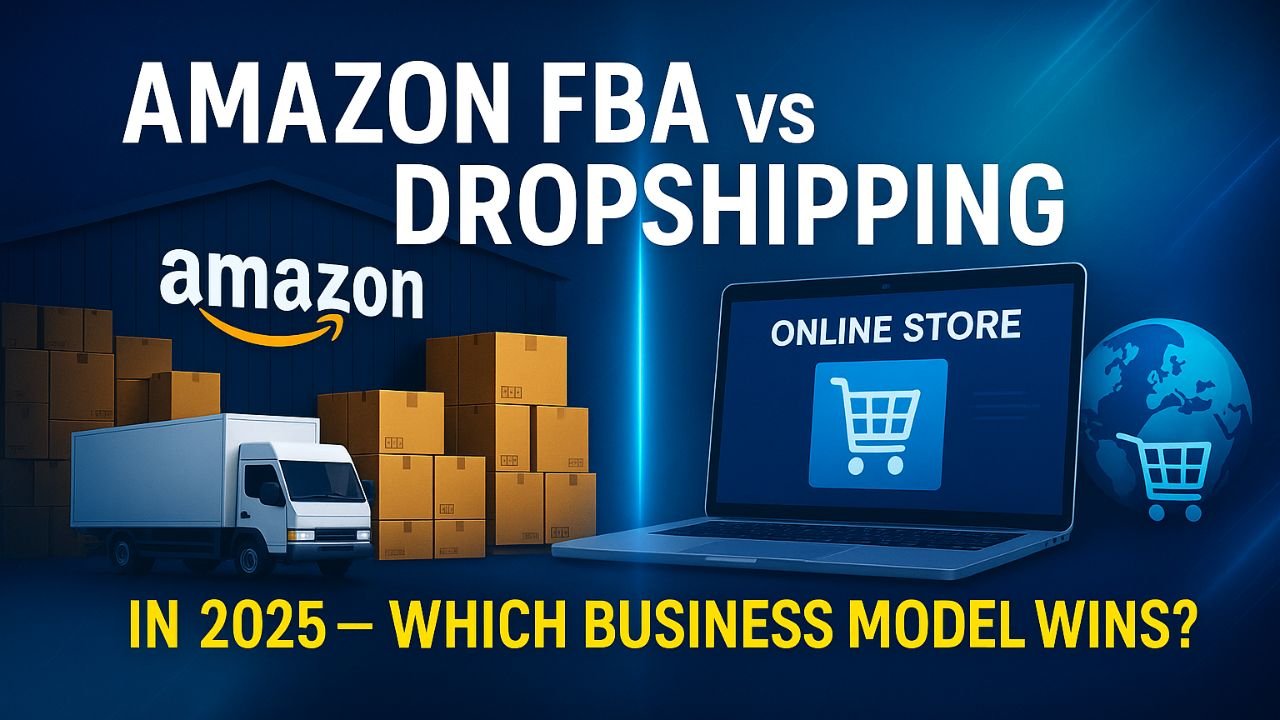
Amazon FBA vs Dropshipping – A Complete Beginner’s Guide
When entrepreneurs decide to start an online business, one of the most common debates is Amazon FBA vs Dropshipping. Both models promise the dream of building an eCommerce business without needing a physical storefront, but they operate very differently.
In this comprehensive guide, we’ll break down everything you need to know about Amazon FBA (Fulfillment by Amazon) and Dropshipping in 2025. We’ll cover costs, profit margins, logistics, scalability, pros, and cons so you can make the best decision for your entrepreneurial journey.
Table of Contents

What is Amazon FBA?
Amazon FBA (Fulfillment by Amazon) is a program that allows sellers to send their inventory to Amazon’s warehouses. Amazon stores, packs, and ships products directly to customers when an order is placed.
How Amazon FBA Works
- You purchase inventory from suppliers or manufacturers.
- You ship that inventory to Amazon fulfillment centers.
- Amazon handles storage, packaging, shipping, and customer service.
Benefits of Amazon FBA
- Prime Eligibility: Your products become available to millions of Amazon Prime members.
- Logistics Handled: Storage, shipping, and returns are managed by Amazon.
- Customer Trust: Shoppers feel secure buying through Amazon.
Challenges of Amazon FBA
- Upfront Investment: Sellers must buy stock before selling.
- Storage Fees: Amazon charges for warehousing unsold items.
- Competition: Many sellers compete for the same products.
What is Dropshipping?
Dropshipping is an online retail method where sellers don’t keep products in stock. Instead, when a customer places an order, the product is purchased from a third-party supplier and shipped directly to the buyer.
How Dropshipping Works
- You create an online store (Shopify, WooCommerce, etc.).
- You list products from dropshipping suppliers.
- When an order comes in, the supplier fulfills it.
Benefits of Dropshipping
- Low Startup Costs: No need to buy inventory upfront.
- Wide Product Selection: You can sell thousands of items without owning stock.
- Location Freedom: Run your business from anywhere.
Challenges of Dropshipping
- Low Profit Margins: Suppliers take a cut, and competition is high.
- Long Shipping Times: Especially when using overseas suppliers.
- Quality Control Issues: You rely on suppliers for product quality.
Amazon FBA vs Dropshipping – Cost Comparison
One of the biggest factors in choosing a business model is the startup and operational costs.
Amazon FBA Costs
- Initial inventory purchase: $1,000–$3,000
- Amazon seller account fee: $39.99/month (professional plan)
- FBA fees: Based on size, weight, and storage time
Dropshipping Costs
- Website/Store setup: $29–$79 per month (Shopify or WooCommerce)
- Marketing/Ads: $200–$1,000 depending on budget
- Supplier costs: Paid per product sold (no upfront inventory)
Which is More Affordable?
Dropshipping is cheaper to start but has slimmer profit margins. Amazon FBA requires upfront investment but offers higher scalability and trust.
Profit Margins – Amazon FBA vs Dropshipping
Amazon FBA Profit Margins
On average, sellers report 15%–30% margins after expenses. With optimized listings and private label branding, margins can increase to 35%–40%.
Dropshipping Profit Margins
Dropshippers average 10%–20% margins, with many struggling due to rising ad costs. Successful dropshippers rely heavily on marketing and trending products.
Dropshipping Profit Margins Compared to FBA
- Dropshipping = quick testing, lower profit per item
- Amazon FBA = higher profit per item, but slower to launch due to inventory requirements
Scalability and Long-Term Potential
Amazon FBA Scalability
Amazon FBA is built for scalability. Once you have winning products, you can expand into multiple categories, launch private label brands, and even sell your business to investors.
Dropshipping Scalability
Dropshipping is great for testing products and making quick profits, but long-term growth is harder. Building a brand requires shifting to private label or warehousing.
Which Model Wins for 2025?
For entrepreneurs seeking a long-term business, Amazon FBA is more sustainable. For those wanting a low-risk entry point, Dropshipping is ideal.
Pros and Cons – Amazon FBA vs Dropshipping
Pros and Cons – Amazon FBA
Pros
- High trust and credibility
- Prime shipping benefits
- Strong long-term branding potential
Cons
- Higher upfront costs
- Strict Amazon policies
- Fees that cut into margins
Pros and Cons – Dropshipping
Pros
- Low startup investment
- Easy to launch quickly
- Flexible and location independent
Cons
- Lower profit margins
- Shipping delays from overseas suppliers
- Quality control issues
Amazon FBA vs Dropshipping – Which Should You Choose?
The choice between Amazon FBA vs Dropshipping depends on your goals, budget, and risk tolerance.
- If you want to build a long-term eCommerce brand and can afford an upfront investment, Amazon FBA is the winner.
- If you want to start lean, test products, and learn marketing with minimal risk, Dropshipping is a great entry point.
Both models can be profitable if executed well. Many entrepreneurs even combine both strategies—starting with Dropshipping to test products, then moving into FBA for scale.
Real-World Case Studies – Amazon FBA vs Dropshipping
Sometimes the best way to decide is by learning from real entrepreneurs who have tried both models.
Case Study 1 – The Dropshipping Beginner
Sarah, a college student in California, wanted to start an online business with very little capital. She launched a Shopify store selling phone accessories through dropshipping.
- Investment: $200 on Shopify and Facebook ads
- Outcome: She tested 10 products and found one winning item that generated $5,000 in sales within a month.
- Challenge: Profit margins were thin, shipping delays from overseas suppliers frustrated some customers.
Lesson: Dropshipping allowed Sarah to enter the market quickly with little money, but scaling required shifting to Amazon FBA vs Dropshipping in 2025 – Which Business Model is Best for Entrepreneurs?
Case Study 2 – The Amazon FBA Brand Builder
John, a marketing professional from Texas, saved $5,000 to invest in Amazon FBA. He sourced eco-friendly kitchen products from a trusted supplier and sent them to Amazon warehouses.
- Investment: $5,000 in inventory and branding
- Outcome: Within 6 months, John’s store generated $30,000 in revenue with 25% profit margins.
- Challenge: He faced competition and occasional storage fees but gained loyal customers and repeat sales.
Lesson: Amazon FBA required more upfront investment, but it built a stronger brand presence with long-term growth potential.
Marketing Strategies for Amazon FBA vs Dropshipping
Even the best products won’t sell without effective marketing. The approach to marketing differs between these two models.
Amazon FBA Marketing Strategies
- Amazon SEO: Optimize listings with keywords customers are searching for.
- Sponsored Ads: Pay-per-click ads inside Amazon boost visibility.
- Reviews & Ratings: Build social proof to improve conversions.
- Brand Registry: Protect your brand and access advanced marketing tools.
Dropshipping Marketing Strategies
- Social Media Ads: Facebook, TikTok, and Instagram ads drive quick traffic.
- Influencer Marketing: Partner with niche influencers to reach target audiences.
- Email Funnels: Capture leads and convert them into long-term customers.
- Content Marketing: Blog posts, videos, and SEO help reduce ad dependency.
Step-by-Step Guide – How to Decide Between Amazon FBA and Dropshipping
If you’re still unsure, follow this simple framework:
Step 1 – Assess Your Budget
- If you have less than $1,000 → Dropshipping is safer.
- If you have $2,500+ to invest → Amazon FBA is realistic.
Step 2 – Define Your Business Goals
- Want quick testing and short-term income? → Dropshipping.
- Want to build a long-term brand and possibly sell your business? → Amazon FBA.
Step 3 – Evaluate Your Risk Tolerance
- Low risk, flexible → Dropshipping.
- Higher risk, higher reward → Amazon FBA.
Amazon FBA vs Dropshipping – Common Myths Debunked
Many entrepreneurs hesitate because of misconceptions. Let’s clear them up.
Myth 1 – Dropshipping is Dead
Not true. While competition is high, new platforms like TikTok Shops and print-on-demand keep dropshipping relevant in 2025.
Myth 2 – Amazon FBA is Only for Big Players
False. Thousands of small sellers start on Amazon every month. The key is niche research and strong branding.
Myth 3 – You Can Get Rich Overnight
Both models require learning, testing, and consistent effort. Neither is a get-rich-quick scheme.
Conclusion – Amazon FBA vs Dropshipping in 2025
Both Amazon FBA and Dropshipping have their strengths and weaknesses. Dropshipping is perfect for beginners who want to test the waters without heavy investment. Amazon FBA is ideal for entrepreneurs serious about building a scalable, brand-driven business.
If you’re starting out, you can even combine both models:
- Use Dropshipping to test products cheaply.
- Shift winning products to Amazon FBA for scalability and Prime trust.
At the end of the day, success comes down to execution. The best model is the one you’re willing to commit to, learn, and grow consistently.
FAQ
Is Amazon FBA more profitable than Dropshipping?
Yes, on average. Amazon FBA sellers often achieve higher margins (15–30%) compared to dropshippers (10–20%).
Which is easier to start, Amazon FBA or Dropshipping?
Dropshipping is easier and cheaper to start. Amazon FBA requires more setup and upfront investment.
Can I combine both business models?
Absolutely. Many entrepreneurs test products with dropshipping, then switch winning products to FBA for scaling.
Which is better for long-term brand building?
Amazon FBA is stronger for building a long-term, sellable brand. Dropshipping is better for short-term cash flow.